Posts

Showing posts with the label Energy

Revolutionizing Energy Storage: The Rise Of Solid State Battery

Image
 Solid State Battery In an era where portable electronics and electric vehicles dominate our daily lives, the demand for efficient and high-performing energy storage solutions is greater than ever before. This quest for improved battery technology has led to a promising advancement known as Solid State Battery . Departing from the traditional liquid electrolyte found in conventional lithium-ion batteries, solid-state batteries employ solid electrolytes to enhance safety, energy density, and overall performance. This article explores the concept of solid-state batteries, their potential benefits, and the challenges that must be overcome for their widespread adoption. As the world seeks to reduce reliance on fossil fuels and transition towards a sustainable energy future, the development of advanced energy storage systems is crucial. Conventional lithium-ion batteries, despite their widespread use, have limitations in terms of energy density, safety concerns, and lifespan. These l...

Thermal Energy Storage: Unlocking The Potential Of Sustainable Power

Image
Thermal Energy Storage In our ever-changing world, the demand for sustainable energy sources continues to grow. As we strive to reduce our dependence on fossil fuels, renewable energy systems are gaining momentum. However, one of the key challenges with renewable energy is the intermittent nature of generation. This is where Thermal Energy Storage (TES) comes into play. TES is a groundbreaking technology that allows us to store excess energy for later use, addressing the intermittent supply issue and unlocking the full potential of sustainable power. Thermal Energy Storage refers to the process of storing thermal energy, typically in the form of heat or cold, for later use. It enables the efficient capture and storage of excess energy generated by renewable sources such as solar or wind power. The stored energy can then be retrieved and utilized when needed, providing a reliable and continuous energy supply. There are several types of Thermal Energy Storage systems, each suited t...

Flue Gas Desulfurization (FGD): A Solution For Cleaner Air

Image
Flue Gas Desulfurization (FGD) In the pursuit of a cleaner and healthier environment, industries around the world are increasingly focusing on reducing their emissions and minimizing their impact on air quality. One of the key challenges faced by many industries, particularly those reliant on fossil fuels, is the emission of sulfur dioxide (SO2) during the combustion process. However, with the advent of Flue Gas Desulfurization (FGD) technologies, significant progress has been made in mitigating the harmful effects of SO2 emissions. This article delves into the concept of FGD, its various techniques, and its crucial role in ensuring cleaner air for all.   Flue Gas Desulfurization (FGD) commonly referred to as FGD, is a set of technologies and processes designed to remove sulfur dioxide from the flue gas produced by power plants, industrial boilers, and other facilities that burn fossil fuels. Sulfur dioxide is a highly reactive and toxic gas that is primarily released during the ...

Microbial Enhanced Oil Recovery Methods Look For Ways To Improve Oil Production From Reservoirs

Image
Microbial Enhanced Oil Recovery The demand for crude oil rises along with the demand for energy fuels. Even after primary and secondary oil extraction processes have been put in place, extremely huge amounts of precious oil are still stranded in the reservoir. To meet the demand for crude oil around the world, Microbial Enhanced Oil Recovery methods look for ways to improve oil production from reservoirs. The most efficient oil production from reservoirs is achieved by enhanced oil recovery methods, which also increase the total effectiveness of upstream operations. More than 50% of the oil that is trapped in the rocks can be extracted using the tertiary techniques, also known as enhanced oil recovery. The high viscosity of petroleum, impermeability of the rocks and reservoirs, and significant capillary forces that keep the oil in wells are some of the challenges that must be overcome for oil production to be optimised. The Microbial Enhanced Oil Recovery approach increases the mobi...

Offshore Decommissioning Entails Disposing Of The Offshore Oil Production Equipment

Image
Offshore Decommissioning  Offshore Decommissioning entails disposing of the offshore oil production equipment as well as safely sealing mature and nonproductive wells in the earth's surface. The Petroleum Act of 1998 of the British parliament imposes this as a legislative requirement. In the world of petroleum business, decommissioning is a fast expanding sector with great prospects and low hazards. The procedure used to decommission an offshore oil and gas system is crucial for environmental safety reasons since it may have an impact on the maritime environment and result in the disposal of hazardous materials. The potential for effective control methods such as Offshore Decommissioning , which involves carefully capping oil wells and properly disposing of the equipment used in offshore oil fields, has increased because to the growing environmental concern and horrifying repercussions of abandoned oil wells.   Global Offshore Decommissioning Market Was Valued At ...

Pumped Hydro Storage Systems Generate Electricity Without Producing Any Emissions

Image
Pumped Hydro Storage  Pumped Hydro Storage is a type of energy storage system that uses the potential energy of water to store and generate electricity. It is a simple, efficient, and reliable technology that has been used for decades to provide energy storage for electric power systems. Pumped hydro storage is one of the largest and most proven forms of energy storage available today, accounting for over 95% of all utility-scale energy storage capacity in the world. The basic principle of Pumped Hydro Storage is simple. During periods of low electricity demand, excess electricity is used to pump water from a lower reservoir to an upper reservoir. This stored energy can then be released to generate electricity when demand is high. When electricity demand is high, the water is released from the upper reservoir, flowing through a turbine to generate electricity, and then returning to the lower reservoir. The process is repeated as needed, with the system acting as a kind of batte...

Water Turbine Produce Electricity With Less Negative Environmental Effects

Image
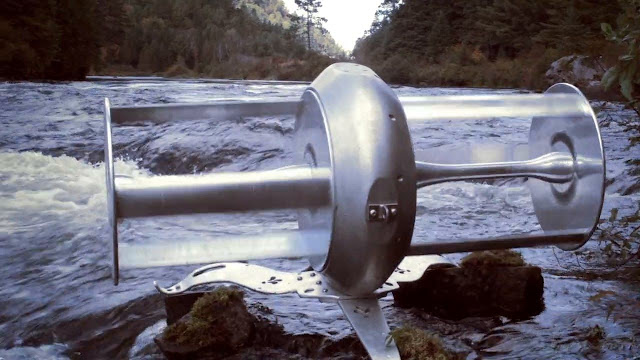
Water Turbine Water turbines create electricity with less harmful environmental effects because they are renewable. Power generation via water turbines is used in both household and business contexts.  One of the oldest forms of energy, hydroelectricity produces pure energy free from pollution. Rapid development and technological innovation have increased hydroelectricity's overall output. A turbine is a key component in the hydroelectric power plants that are located almost everywhere in the world to produce energy. The turbine is a mechanical device that transforms water's potential energy into kinetic energy. Consequently, Water Turbine aids in the operation of turbine blades, which convert energy into mechanical energy. A generator's rotor is turned by the turbine's rotor, turning mechanical energy into electrical energy. For the purpose of producing electricity, hydropower generation projects use an electro-mechanical device known as a Water Turbine . A hydro tu...